 IndianBreaches
LIVE
IndianBreaches
Nirvasa is an India-based digital healthcare platform operated by Nirvasa Healthcare Private Limited, offering end-to-end remote healthcare services through online consultations, personalised treatment plans, ongoing care programs, and health product delivery. According to the company, the platform serves millions of users across India and focuses on areas including:
Its operating model appears to rely heavily on digital onboarding, self-assessment forms, remote doctor interaction, treatment workflows, and home delivery — meaning the platform necessarily processes personal and contact information as part of care delivery
That context matters.
Because when a healthcare platform is involved, even routine customer data carries a different level of sensitivity.
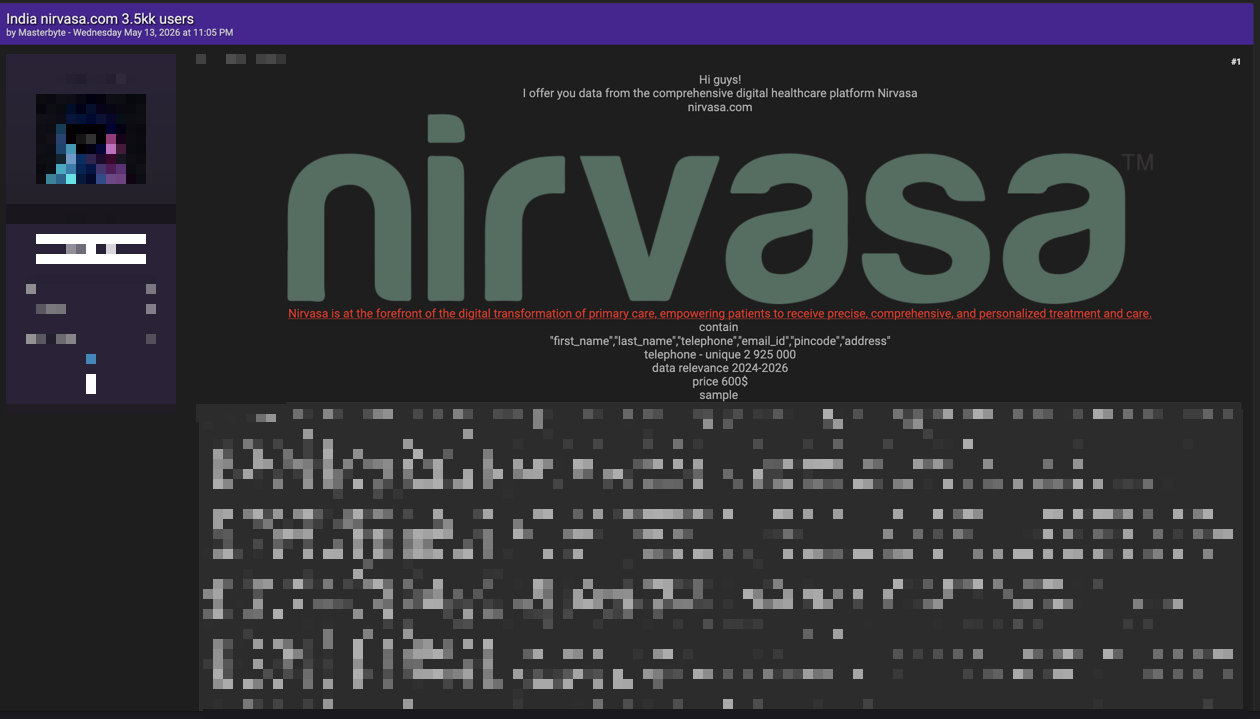
A threat actor using the alias “Masterbyte” posted a listing claiming to be selling data allegedly linked to Nirvasa.com.
According to the listing:
At the time of writing, there is no official confirmation from Nirvasa regarding the authenticity of the claims.
The published sample appears to contain structured records including:
Additional technical fields visible in the sample suggest operational application metadata, including:
Sample rows also appear to show:
This suggests the material may not be just a contact list, but application-side operational records.
This is where context becomes important.
Nirvasa markets itself as a healthcare platform built around private consultations, customised care, and confidential treatment journeys. The company’s own privacy language explicitly emphasizes confidentiality around user information. :contentReference[oaicite:1]{index=1}
That means even if the leaked sample does not show diagnosis data, prescriptions, or medical history, the exposure is still sensitive because it potentially links identifiable individuals to a healthcare service ecosystem.
For some categories of healthcare, that alone can be deeply personal.
A breach involving an ecommerce platform is one thing.
A breach involving a healthcare-facing platform is different.
Because attackers could potentially use the context for:
Healthcare users are more likely to respond quickly to messages that appear legitimate — especially when health is involved.
If authentic, possible risks include:
Digital healthcare has made access easier and faster.
But that convenience also means large volumes of sensitive user interactions now live inside web applications, APIs, onboarding systems, and customer support workflows.
And when those systems are exposed, the consequences are often more personal than conventional breaches.
At this stage, the claims remain unverified.
But if the sample is authentic, this would not simply be another “con
⚠️ If your data was affected by this breach — change your passwords immediately, enable 2FA, and monitor your bank accounts. Read our full guide →